
Hair Loss Treatment in Myeongdong, Seoul
Hair loss is thinning or shedding of scalp hair caused most often by androgenetic alopecia, a genetic sensitivity of follicles to DHT, and also by stress-related telogen effluvium, nutritional deficiency, thyroid disease or autoimmune alopecia areata. A dermatologist first diagnoses the type, then may combine medication such as minoxidil with in-clinic treatments like hair loss PRP and exosome therapy.
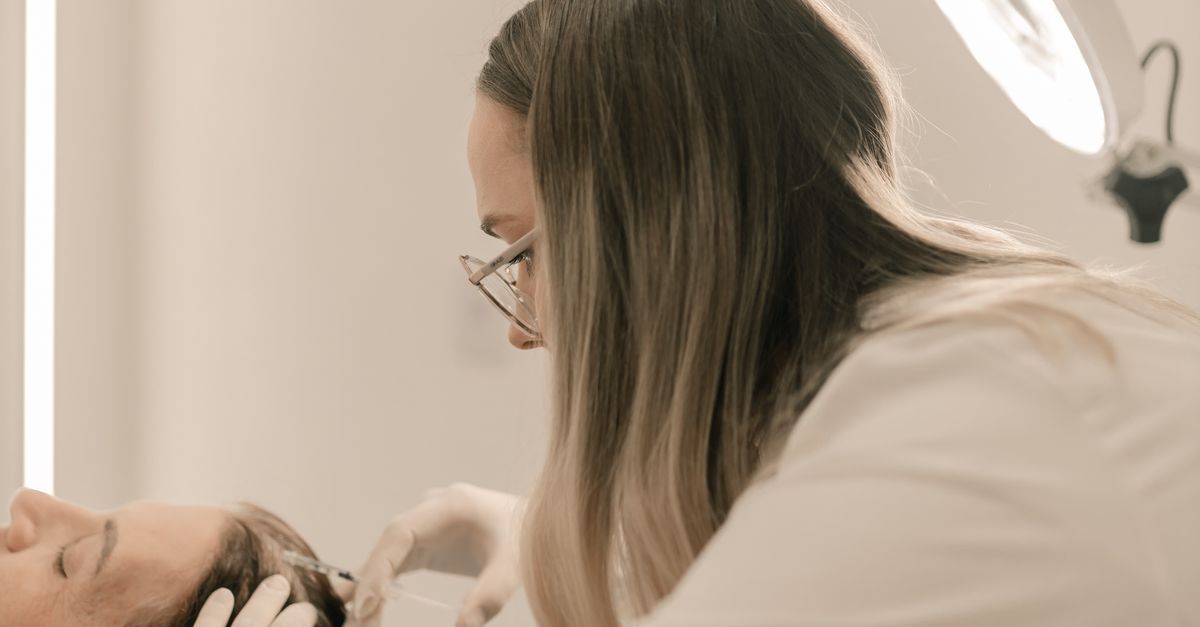
What are the main types of hair loss?
Hair loss has many causes, and the right treatment depends on the type:
- Androgenetic alopecia: gradual thinning at the crown and temples in men, or a widening part in women, driven by DHT and genetics
- Telogen effluvium: diffuse shedding two to three months after illness, surgery, childbirth, stress or crash dieting
- Alopecia areata: round, smooth bald patches from an autoimmune reaction
- Traction alopecia: thinning from tight hairstyles
- Deficiency or hormonal causes: low iron, vitamin D or thyroid problems
How does a dermatologist diagnose hair loss?
Our board-certified dermatologist [DOCTOR NAME] will ask when the loss started, whether it is shedding or thinning, and about family history, diet, medications and stress. A trichoscope, a magnifying scalp camera, shows follicle density and miniaturization. Blood tests may be suggested to check iron, thyroid and vitamin levels.
Which treatments help hair loss?
Hair loss PRP uses platelet-rich plasma from your own blood, concentrated and injected into the scalp to deliver growth factors to weakened follicles. Exosome therapy applies or injects cell-derived vesicles that may support follicle signaling. Medical options can include topical or oral minoxidil and, for male pattern loss, finasteride or dutasteride, prescribed after review. Alopecia areata may need steroid injections or other targeted therapy. Ask us which options are available.
Who should take care?
PRP is not suitable for people with certain blood disorders, active infection or those on some anticoagulants. Some medications are not suitable during pregnancy or when planning a pregnancy. Sudden patchy loss, scarring or scalp pain needs medical review first.
What happens during a PRP session?
A small blood sample is taken and spun in a centrifuge. The scalp is numbed, then plasma is injected in tiny amounts across thinning areas. The session takes about 45 to 60 minutes. Mild tenderness lasts a day.
How long until hair improves?
Shedding often slows in two to three months. Visible thickness usually takes four to six months, because hair grows about 1 cm per month. PRP is typically done as three to four sessions about four weeks apart, then maintained. Results vary.
Can I start hair loss treatment in Seoul?
Yes. A visit to Myeongdong can include diagnosis, a first PRP session and a medical plan to continue at home. Bring any previous blood test results.
What helps at home?
Eat enough protein and iron, manage stress, avoid tight hairstyles and use treatments consistently for at least six months.
At a glance
- Common causes: Androgenetic alopecia, stress shedding, deficiencies, thyroid issues and alopecia areata
- Best-matched treatments: Hair loss PRP, exosome therapy, prescription minoxidil or finasteride
- Typical sessions: 3 to 4 PRP sessions, about 4 weeks apart
- Visible improvement: Less shedding in 2 to 3 months; thicker hair in 4 to 6 months
- Prevention tip: Start treatment early, while follicles are still active
Related pages
Frequently asked questions
Does PRP really work for hair loss?
Studies suggest PRP can improve hair density and thickness for many people with androgenetic alopecia, especially in early to moderate stages. It works best when follicles are still active, and results vary between individuals. PRP is often combined with medical treatment like minoxidil. It is less effective for long-standing baldness where follicles are no longer active.
Is hair loss in women treated differently?
Female pattern hair loss usually shows as a widening part rather than a receding hairline. Treatment often includes topical or low-dose oral minoxidil, PRP and checking for iron deficiency, thyroid issues or hormonal causes like PCOS. Some medications used in men are not suitable for women of childbearing age, so the doctor will tailor the plan.
How long should I try a hair loss treatment before judging it?
Give any hair loss treatment at least six months before deciding whether it works. Hair grows slowly, and some medications cause a brief increase in shedding at first as weak hairs make room for new growth. Taking standardized photos every two months helps you and your doctor track progress objectively.
Can stress cause my hair to fall out?
Yes. Significant stress, illness, surgery, childbirth or rapid weight loss can trigger telogen effluvium, where many hairs shift into the shedding phase at once. Shedding usually appears two to three months after the trigger and often recovers within six to nine months. A dermatologist can confirm the cause and rule out other conditions.
Plan your visit to Beautystone Myeongdong
Every treatment starts with a consultation with our physician, who confirms whether it suits your skin and your travel dates. English consultations available.
This page is general medical information, not a diagnosis. Results, downtime and side effects vary between individuals. Suitability is decided by a licensed physician at consultation. See our medical disclaimer .